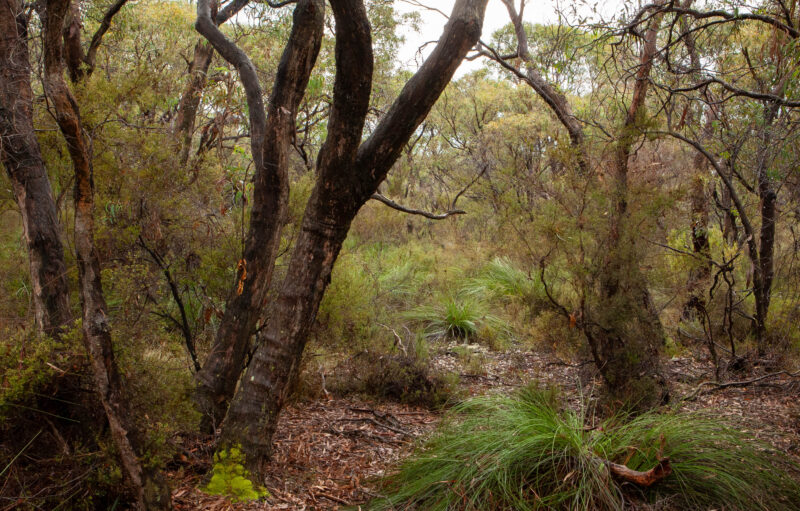
Victoria ended commercial native forest logging on the 1 January 2024. It was a landmark moment for nature protection. But a new government policy is bringing logging back by stealth, with fewer protections than before.
It’s called Victoria’s State Forest By-Products Framework.
What is the By-Products Framework?
The framework lets the government remove trees from state forests and sell them to timber mills, firewood suppliers, and others under the cover of fire management and maintenance works.
National parks and other conservation areas aren’t included in the framework yet, but the government are currently considering adding them as well. Despite this, we’ve seen this loophole logging strategy trialled in national parks across Vic in the last few years with devastating consequences.
Trees can be removed during:
- Construction of new firebreaks (6,000 km are proposed across Victoria)
- Road building for fire access
- Mechanical fuel preparation work
- Removal of trees deemed ‘hazardous’
- ‘Clean-up’ after storms or other weather events.
The trees can then be sold or given to mills, firewood companies, or used for activities like wood chopping.
In practice, it’s commercial logging by another name, with far less scrutiny and far fewer protections for wildlife. There’s no independent oversight to make sure works are actually necessary, damage to wildlife and habitats is limited and commercial priorities don’t override nature protection.
Why is it a problem?
There’s no meaningful safeguards
Under the old commercial logging system, there were detailed rules about where logging could and couldn’t happen. There were special protection zones where logging was banned. There were codes of practice. There was a regulator.
None of that exists here.
Forest Fire Management Victoria (FFMV) oversees its own work with no independent oversight. There are no explicit nature protection rules, no transparent reporting, and no requirement to make assessments public. In practice, the same forestry staff and contractors who worked for the disbanded Vic Forests are often doing the same work. Just under a different name.
It’s already causing damage
It’s already been trialled across the state, and the impacts are clear.
Wombat-Lerderderg National Park
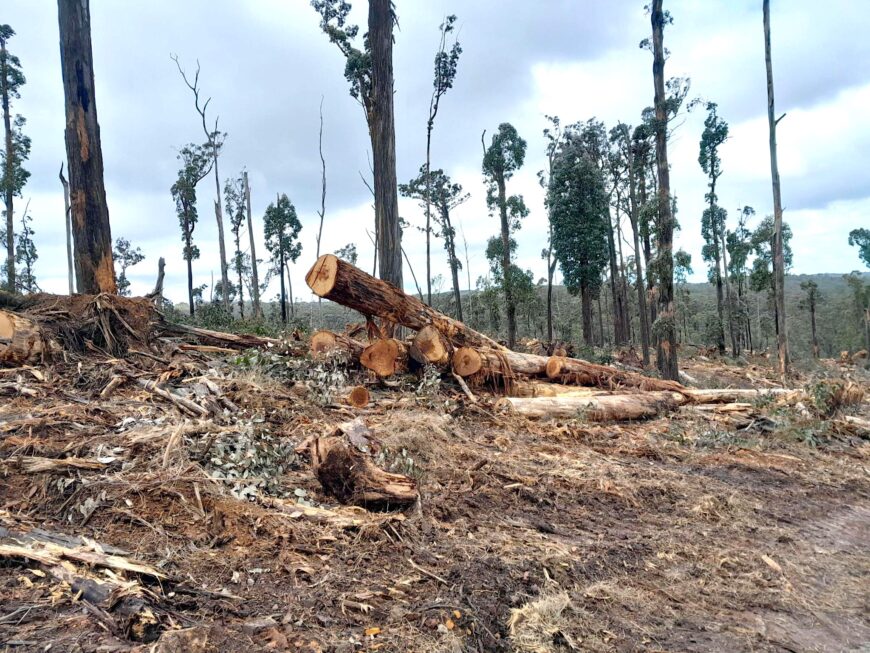
Over four years, an estimated 10,000–12,000 cubic metres of trees were removed from Wombat Forest (aka the new Wombat-Lerderderg Naitonal Park). Nearly three times what was once considered ‘sustainable’ under formal commercial logging. The work has damaged habitat for threatened wildlife, disturbed soil, compacted the forest floor, and cut more tracks and roads. Logs have been stockpiled near Daylesford and sold at auction.
Yarra Ranges National Park
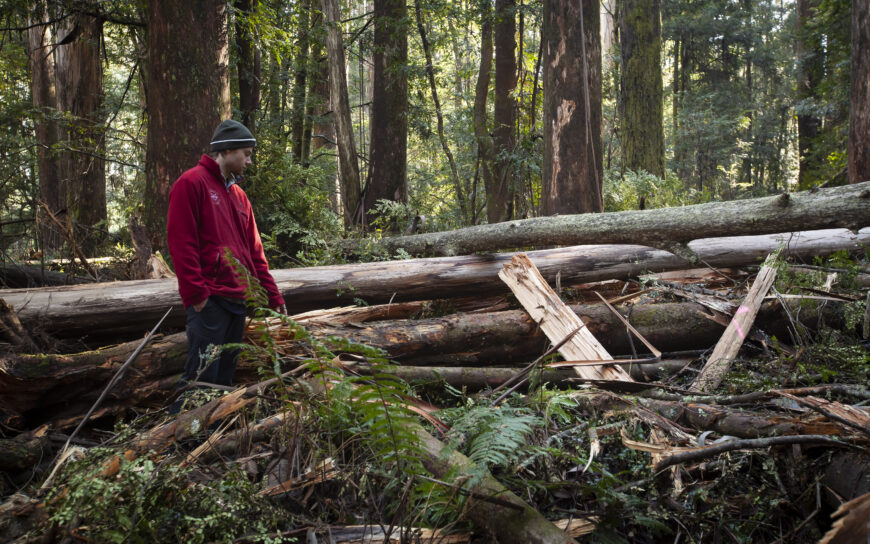
In May 2024, citizen scientists found a dead Greater Glider where Forest Fire Management Victoria (FFMV) had been cutting down trees. Nature groups had specifically warned state and federal ministers that Endangered Greater Gliders were living in those trees. Despite this, and evidence of impacts on Critically Endangered Leadbeater’s Possums, regulators did not act.
Dandenong Ranges National Park
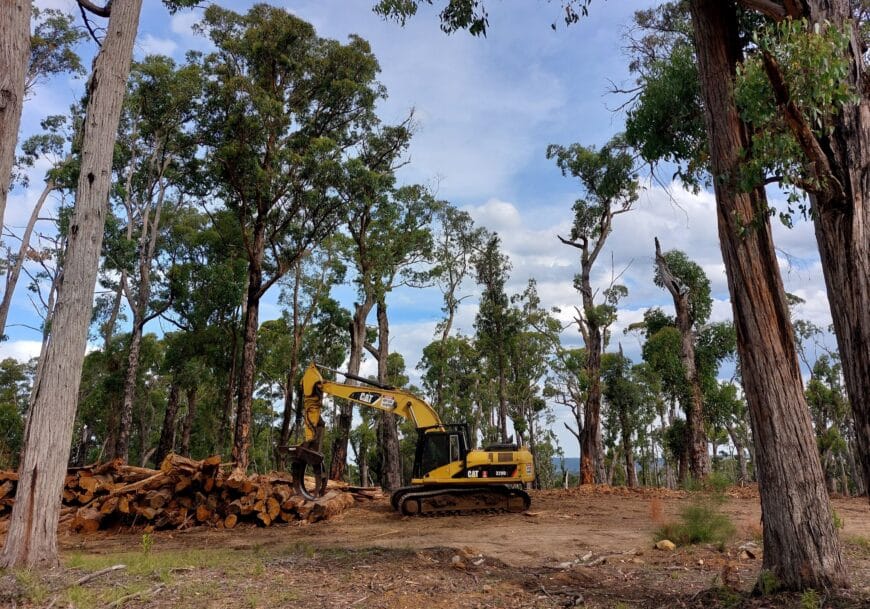
A massive windstorm hit the Dandenong Ranges in June 2021. Slowly, seedlings started to grow, and the forest began to recover. Then FFMV moved in. They called it a ‘forestry transition project’. Logging machinery has now damaged parts of that recovery. Yellow-bellied and Greater Gliders, Powerful Owls and Sooty Owls all live in and around those operations. And their habitat has been smashed.
There have been other examples of the damage this practice causes in the Cobaws, Silvan Reservoir and Gippsland.
The new by-products strategy creates an official policy for continuing and expanding this destruction.
What’s lost when trees are removed?
Dead trees are homes
Fallen and standing dead trees are important habitat in forests. Over 300 species of wildlife – gliders, possums, owls, bats, parrots, antechinus and more – depend on tree hollows to shelter, breed, and raise young. Fungi, invertebrates, woodland birds and reptiles all rely on dead wood.
The removal of fallen trees has been recognised as a threat to wildlife under Victoria’s own nature laws since 2003. The By-Products Framework sets no minimum standards for how much dead wood must remain.
Old trees do more
Large old trees flower more, produce more nectar and pollen, and provide more food for wildlife than young trees. Removing them reduces food across the forest.
Wildlife need fallen trees to move safely
Animals like Brush-tailed Phascogales and Carpet Pythons use logs to travel safely across the forest floor. Without them, they’re exposed to invasive species like foxes and cats.
Soil and water are also at risk
Logging machinery causes soil compaction, erosion, and disturbance. Especially on slopes and near waterways. The framework makes no mention of soil health or water quality protection. There are no waterway buffers, no erosion thresholds, no requirements to protect streams.
What we’re calling for
Bushfire preparation is vital to protect communities. And it doesn’t have to happen at the cost of our precious web of life.
The By-Products Framework undermines protection. Not through open policy debate, but through the stealthy removal of oversight and accountability.
It embeds a system where commercial logging can continue without the rules that once applied to it. A system without independent oversight, where commercial priorities can override nature protection.
We’re calling on the Victorian Government to:
- Ban the selling of logs from public forests to commercial timber mills and firewood merchants.
- Set up independent oversight of Forest Fire Management Victoria’s activities before the framework is implemented.
- Release a public code of practice with clear, enforceable rules to protect nature.
- Commit to transparency and release ecological assessments for all significant works on public land.
- Commit to protecting national parks and conservation reserves by ruling out the removal and selling of trees in these places.
- Put checks and balances in place to make nature protection, not commercial gain, the primary purpose of forest management.
Let your elected reps know it’s time for a REAL end to native forest logging.