NEWS 6 May 2026 |
The Victorian Government’s 2025–26 budget doubles down on cost of living, safety and transport, but nature barely gets a look-in. Here’s what it means for habitats and wildlife.
The Treasurer’s catchphrase ‘Easier. Safer. More Affordable’ says it all. These are worthy goals for people. But nature doesn’t appear in the equation.
Total departmental funding for nature has fallen by around $535 million compared to last year’s budget. This continues a pattern of cuts that has steadily weakened the institutions and programs Victoria depends on to protect nature.
Western Port Bay: a commitment without a plan
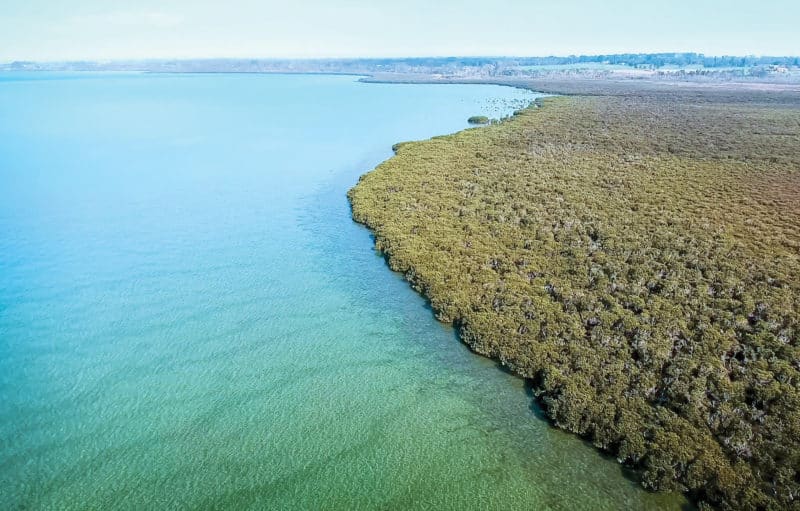
The government committed $124.5 million to the Victorian Renewable Energy Terminal (VRET) at the Port of Hastings, a significant infrastructure investment inside Western Port Bay. Yet no funding was allocated to plan for the Bay’s protection.
For five years, community groups and scientists have called for a Marine Spatial Plan for Western Port Bay. A framework to coordinate how this internationally significant Bay is used and protected. The state has previously committed to this work. Despite that, no money was set aside for a Marine Spatial Plan or Western Port Bay Framework, or for the ongoing protection and restoration of the Bay.
Even a modest initial investment, enough to begin the planning process, would have been a meaningful step. Western Port Bay’s communities and stakeholders have many projects, large and small, ready to improve the Bay’s health. Without a proper plan, those efforts remain uncoordinated and unfunded.
Parks Victoria: stretched thin, cut further
Parks Victoria received $187.3 million in last year’s budget but spent $211.7 million, likely due to restructuring costs and the effects of long-term under-resourcing. This year’s allocation drops further, to $184 million.
Staff numbers are now at a historic low.
The newly legislated central west parks, a significant conservation win from late last year, received no specific funding for staff, on-ground works or biodiversity programs.
New parks need investment to thrive. In the past, new parks like the new Redgum Parks have received significant funding for establishment, so it’s disappointing to see no funding allocated for the new central west parks.
Forests: a new program raises old questions
An additional $9.9 million has been allocated under an Orwellian titled program called ‘Activating Healthy Forests.’ This builds on around $80 million already committed to the Future Forests Program over the past two years. But what is it?
Part of this new funding is described as supporting ‘the assessment of Forest Produce Licence applications’ to allow ‘eucalyptus oil and niche specialty timber use’ in state forests. Basically, it sounds like a return to native forest logging in some form.
We’ll be watching closely to understand what this means in practice, and whether it opens the door to new forms of native forest exploitation.
Other missing pieces
Across the budget, several other pressing issues received no new funding:
Feral deer: one of the most damaging invasive species in Victoria, with no additional control funding announced.
Landcare facilitators: the people who support community conservation on private land are already stretched to breaking point. The budget offered no increase in funding.
Biodiversity 2037: Victoria’s long-term biodiversity strategy remains largely unfunded, with no new commitment flagged in this budget.
The bigger picture
Last year’s Department of Energy, Environment and Climate Action budget was overspent by around $700 million, which is sourced from state government contingency funds. That overspend was across bushfire response, agency restructures, grasslands funding under the Melbourne Strategic Assessment (sourced from levies) and additional forest contractor costs (which already exceeded $72 million per year). Forest contractors are employed by government for fire related works including ‘storm clean up’, fire breaks and fire response.
Meanwhile, key nature protection institutions continue to face cuts.
The pattern is clear: Victoria’s nature agencies are being asked to do more with less, year after year. Our wildlife and habitats can’t keep absorbing these trade-offs.
We’ll continue to track the budget’s impact on Victoria’s parks, habitats and wildlife, and advocate for the investment nature needs.